Slip casting is a type of ceramic processing. It is also the method I'm using to create bulletproof mugs. So I thought it would be good idea to make a video on how to make a 2 piece plaster mold. It goes by a little quick so if you have any question about what happened during the process feel free to write it in the comment so I can answer them. I hope you enjoy the video.
Tuesday, April 12, 2011

Friday, April 8, 2011
What the Heck is a Ceramic Anyhow?
Well to be honest I can't answer that question. At least not after the lecture I heard last night. I was attending an awards dinner that honors a scientist or engineer for their contribution to the field of the metallurgy and material science. The honoree then gives a presentation about his related field. This years honoree is an expert in the field of ceramic engineering. He received his Sc.D. in ceramic engineering from MIT, was the President of the American Ceramic Society, holds years of experience in industry and government research, and is also a former professor of the Colorado School of Mines. All this experience and accomplishment could not save this man's presentation from falling into the category of bad science communication.
This purpose of this presentation was to explain what ceramics are and their advancement in the field of lighting. I had high hopes for this talk because as you may know I really enjoy the field of ceramics. When the lecture began the room of over hundred nicely dressed people gave their undivided attention. However that interest and attention quickly vanished once the presentation started. Throughout the presentation the speaker just read the slide in a monotonic voice. While reading the slide he would use his laser pointer to underline what he reading further distracting me the actual content of his presentation.
As I looked around the room I could see the same look on everybody's face, BOREDOM. This is an audience full of ceramist, metallurgist, CSM faculty and MME students so this audience has some background in the field. I actually saw somebody fall asleep with his mouth wide open. I looked over to somebody at my table and had to say "I promise ceramics are not this boring." When it was finally over 45 minutes later, which felt like hours the question he tried to answer at the beginning of his presentation, "What the heck is a ceramic anyhow?" was one of the first questions asked by the audience. This showed me how bad the presentation really was.
In my Science Communication class we recently had a guest lecturer discuss the trademarks of a bad presentation. In his presentation I kid you not he made every mistake.
I only hope I can learn from this example of poor science communication so I can communicate better in
This purpose of this presentation was to explain what ceramics are and their advancement in the field of lighting. I had high hopes for this talk because as you may know I really enjoy the field of ceramics. When the lecture began the room of over hundred nicely dressed people gave their undivided attention. However that interest and attention quickly vanished once the presentation started. Throughout the presentation the speaker just read the slide in a monotonic voice. While reading the slide he would use his laser pointer to underline what he reading further distracting me the actual content of his presentation.
As I looked around the room I could see the same look on everybody's face, BOREDOM. This is an audience full of ceramist, metallurgist, CSM faculty and MME students so this audience has some background in the field. I actually saw somebody fall asleep with his mouth wide open. I looked over to somebody at my table and had to say "I promise ceramics are not this boring." When it was finally over 45 minutes later, which felt like hours the question he tried to answer at the beginning of his presentation, "What the heck is a ceramic anyhow?" was one of the first questions asked by the audience. This showed me how bad the presentation really was.
In my Science Communication class we recently had a guest lecturer discuss the trademarks of a bad presentation. In his presentation I kid you not he made every mistake.
I only hope I can learn from this example of poor science communication so I can communicate better in
Tuesday, April 5, 2011
Bigger, is it Really Better?
Right now the electricity generation come from centralized power plants. These plants are enormous, expensive to build, maintain, and produce large amount of waste.
Here are some quick examples of this. Coal power plants produce around 45% of the electricity in the US. The fuel necessary to run these plants is cheap and abundant. However, these plants are only between 25-33% efficient at converting this fuel to energy while producing nearly 41% of all carbon dioxide emissions in the US. Nuclear power is another large scale power generation system that is used. Nuclear power can be used to efficiently create clean energy. It accounts for roughly 13-14% of the worlds electricity. It is vastly more effiecent are create energy then combustion reactions. Nuclear power still is not without its drawbacks. Disposal of nuclear waste in the US still has not been solved with place arguing where and how to store it. The potential for a disaster affecting large areas is always around as scene in Fukushima, Three Mile Island, and Chernobyl. So I was wondering don't we have something else, maybe something a little smaller? That's were Solid-oxide fuel cells come in.

First lets discuss what a fuel cell is. Fuel cells are a devices that acts like a factories that take in fuel (normally hydrogen) and convert it into electrical energy. They are similar to combustion engine in this way. Fuel cells are different because they have little to no moving parts meaning they do not need to expend extra energy to rotate a gear or pumps reducing the chance of mechanical failure. Thanks to the way fuel cell convert fuel to energy there is very little emissions. Fuel cells can easily vary in size and materials. Solid-oxide fuel cells or SOFCs is a type of fuel cells that use ceramics as a means of conducting electricity. Ceramics are used in fuel cell because they offer structural stability and fuel flexibility. To achieve this fuel flexibility SOFCs must be operated at temperatures greater than 600°C. Right now a company called Ceramic Fuel Cells Limited, based in Melborne, Australia, is developing a washing machine sized SOFCs that can power individual homes using natural gas.
BlueGen is the name of the small scale generator Ceramic Fuel Cells Limited is trying to market. This device is currently 60% efficient at converting natural gas to electricity. The BlueGen produces about 12500 kilowatts hours of electricity a year. This is around twice as much as electricity consumed by the average Australian home. Since the BlueGen is a SOFC heat is a byproduct. With a special attachment the off heat can be used to warm water for the household. Another advantage to the BlueGen is if one unit fails only one household is affect reducing the chance major harm. This technology is looking so promising Ceramic Fuel Cells Limited has been selected as a finalist in DuPont Australia &New Zealand Innovation Awards recognizing the commercialization of outstanding science and technology.
With so many advantages to SOFCs I don't know why there use would spread throughout the world.
Here are some quick examples of this. Coal power plants produce around 45% of the electricity in the US. The fuel necessary to run these plants is cheap and abundant. However, these plants are only between 25-33% efficient at converting this fuel to energy while producing nearly 41% of all carbon dioxide emissions in the US. Nuclear power is another large scale power generation system that is used. Nuclear power can be used to efficiently create clean energy. It accounts for roughly 13-14% of the worlds electricity. It is vastly more effiecent are create energy then combustion reactions. Nuclear power still is not without its drawbacks. Disposal of nuclear waste in the US still has not been solved with place arguing where and how to store it. The potential for a disaster affecting large areas is always around as scene in Fukushima, Three Mile Island, and Chernobyl. So I was wondering don't we have something else, maybe something a little smaller? That's were Solid-oxide fuel cells come in.
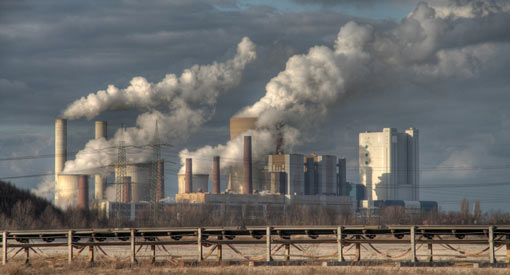
First lets discuss what a fuel cell is. Fuel cells are a devices that acts like a factories that take in fuel (normally hydrogen) and convert it into electrical energy. They are similar to combustion engine in this way. Fuel cells are different because they have little to no moving parts meaning they do not need to expend extra energy to rotate a gear or pumps reducing the chance of mechanical failure. Thanks to the way fuel cell convert fuel to energy there is very little emissions. Fuel cells can easily vary in size and materials. Solid-oxide fuel cells or SOFCs is a type of fuel cells that use ceramics as a means of conducting electricity. Ceramics are used in fuel cell because they offer structural stability and fuel flexibility. To achieve this fuel flexibility SOFCs must be operated at temperatures greater than 600°C. Right now a company called Ceramic Fuel Cells Limited, based in Melborne, Australia, is developing a washing machine sized SOFCs that can power individual homes using natural gas.
BlueGen is the name of the small scale generator Ceramic Fuel Cells Limited is trying to market. This device is currently 60% efficient at converting natural gas to electricity. The BlueGen produces about 12500 kilowatts hours of electricity a year. This is around twice as much as electricity consumed by the average Australian home. Since the BlueGen is a SOFC heat is a byproduct. With a special attachment the off heat can be used to warm water for the household. Another advantage to the BlueGen is if one unit fails only one household is affect reducing the chance major harm. This technology is looking so promising Ceramic Fuel Cells Limited has been selected as a finalist in DuPont Australia &New Zealand Innovation Awards recognizing the commercialization of outstanding science and technology.
With so many advantages to SOFCs I don't know why there use would spread throughout the world.
Sunday, April 3, 2011
Get Real
I don't know about you but I'm a pretty big fan of the whole Star Trek series. Star Trek is show that uses advance technology and talks about what could happen. Most of the technology they use seems unrealistic and fantastic, however every once and a while they show something that actually possible. The link below leads to a scene from "Star Trek IV: The Voyage Home."

http://movieclips.com/Ygyi-star-trek-4-the-voyage-home-movie-the-miracle-worker/
If you didn't actually watch the video I'll sum it up for you nice and quick. The Star Fleet offices from the future need to design a water tank large enough to carry two humpback whales back to the future to stop the destruction of Earth. However they do not have the means to buy the materials necessary to construct such a tank. To get the supplies needed the characters give the owner of Plexicorp the ground breaking formula to create transparent aluminum. This material is so strong it would take six inches of traditional plexiglas to match the strength of just one of transparent aluminum.
In the real world a ceramic material called aluminium oxynitride or AlON share many of the same features of transparent aluminum. AION belongs to a group of materials called transparent ceramics. AlON is a stronge, clear, hard material that is often used in vehicle armor applications because it offers greater field of vision without a loss in protection. AlON was actually tested against a .50 caliber round fired from a sniper rifle and survived.
 If you would like to learn more about transparent aluminum armors a great website to checkout is "How Stuff Work." This article discusses the how its made, why it works and were the transparent ceramics/armor field is going.

http://movieclips.com/Ygyi-star-trek-4-the-voyage-home-movie-the-miracle-worker/
If you didn't actually watch the video I'll sum it up for you nice and quick. The Star Fleet offices from the future need to design a water tank large enough to carry two humpback whales back to the future to stop the destruction of Earth. However they do not have the means to buy the materials necessary to construct such a tank. To get the supplies needed the characters give the owner of Plexicorp the ground breaking formula to create transparent aluminum. This material is so strong it would take six inches of traditional plexiglas to match the strength of just one of transparent aluminum.
In the real world a ceramic material called aluminium oxynitride or AlON share many of the same features of transparent aluminum. AION belongs to a group of materials called transparent ceramics. AlON is a stronge, clear, hard material that is often used in vehicle armor applications because it offers greater field of vision without a loss in protection. AlON was actually tested against a .50 caliber round fired from a sniper rifle and survived.


Wednesday, March 23, 2011
Helping Hand
On March 14th Ceradyne, Inc. had a press release concerning Fukushima nuclear reactor. In the statement they offer to supply boron carbide to help control and contain the radiation of the damaged reactor. Boron has the unique ability of absorbing neutrons. The plan would be to use boron carbide rod to control the radiation leaving. Another use for boron carbide would be to enriched boric acid. The acid would then be dumped into the reactors coolant system causing a reduction in nuclear fission and hopefully reduce the amount of radiation leaving.
Lastly I wish to express my concerns and sympathy for all those effected by this disaster.
Lastly I wish to express my concerns and sympathy for all those effected by this disaster.
Tuesday, March 8, 2011
Bulletproof Mug: Revisited
In a previous blog post I said that a group of students and I were using alumina and zirconia, common materials used in body armor, to create ceramic mugs. In another post I showed some pictures detailing the progress we made. Well now its time for another update.
As you've seen from the pictures in the previous post a solution called a slip was created. The slip is mixture of water, alumina, zirconia and other material. When the slip is ready it is poured into molds used to create desired shapes and remove the water. With this slip we decided to make a M and the Colorado School of Mines' shield.


Don't you just feel the school spirit.
Once the slips are dried they sintered in a furnace at 1500°C for a day. Unfortunately when removing the the slip from the M mold pieces of it broke off rendering it unusable. As for the shield we were able to safely remove it from the mold and have it sintered. When the shield was removed from the furnace it actually turned out pretty good. Unfortunately I forgot to taken any pictures of it before we started our test.
Our tests consisted of taking the shield dropping and throwing it to the ground. This is used to copy the actual test for the mug. At first we started by taking the shield and dropping from table height. When that did not break it we started throwing it to the ground by hand. The sample finally broke when we dropped it from the second story of Hill Hall. See the aftermath.
 |
| Its just a scratch. |
 |
| Okay maybe it a bit more serious than that. |
 |
| Never touch the fracture surfaces. |
Although it maybe hard to see from this there are small holes and pore all along the surface where the shield broke. This means that the slip we made was not completely dense. These holes act as concentration for forces and act as the origin for cracks to occur. These holes were most likely caused by air bubbles present in the slip after it was milled. With this knowledge we will continue to improve our methods to produce the strongest mug possible. Stay tuned for the next installment of "Bulletproof Mug."
Wednesday, March 2, 2011
Not Just a One Trick Pony
So I am gonna take a little detour and talk about some other uses of ceramics. If you have been keeping up with this blog you might remember that ceramics are used in armor because they have high compressive strength, they are relatively light and hard. You'd probably expect that many of these properties that make ceramics good in armor could be applied to other areas.
Well you're right. In many crushing and grinding operation including mineral processing ceramics are used. To break a material you have to hit it with something harder and stronger than it. When material like alumina is pressed and fired at temperatures around 1400°C they are highly dense, super tough, very hard, and wear resistant. What better material is there to crush ore?
Ceramics can also be used for cutting blades. Many of you have probably seen adds for ceramic knives and said "Why would I pay that much for a stupid knife?" Well there are actually many advantages to owning a ceramic knife. The first and probably most important feature is these knives never need to be sharpened. Second while traditional knives may rust or tarnish ceramic knives won't. This point may be an advantage or disadvantage depending on its uses but ceramic knives do not bend. However, a major problem with these knives is they are still somewhat brittle like most other ceramics so if you drop it on the floor it may break. Still I believe the benefits of ceramic knives outweigh the few disadvantages.
I think I'll talk about one more use of ceramics outside of armor. One very important application of ceramics is they are used as building material. From bricks to concrete these ceramics are commonly used in the construction industry. They are cheap, abundant and easy to produce. Yet they still retain high compressive strength which makes them ideal for stacking tall structures.
I hope this post has shown that ceramics have many applications outside of armor and is very important to our lives. In truth I did not even cover their application in fields like electronics or renewable energy.
Well you're right. In many crushing and grinding operation including mineral processing ceramics are used. To break a material you have to hit it with something harder and stronger than it. When material like alumina is pressed and fired at temperatures around 1400°C they are highly dense, super tough, very hard, and wear resistant. What better material is there to crush ore?
 |
| Ball Mill: the yellow represents the ore while the grey ball represent the ceramic |
 |
| Nice set of ceramic knives good for any kitchen |
I hope this post has shown that ceramics have many applications outside of armor and is very important to our lives. In truth I did not even cover their application in fields like electronics or renewable energy.
Subscribe to:
Posts (Atom)